Overview
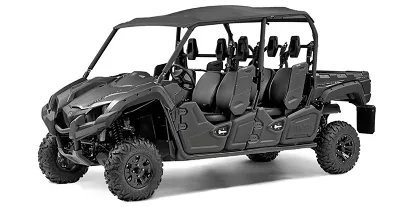
Anyone running tasks on rugged terrain or working across large properties will appreciate a utility vehicle built for dependable performance and practical functionality. The Yamaha Viking 4×4 is designed as a mid-sized utility side-by-side, targeting owners who prioritize durability, ease of use, and off-road capability for farming, ranching, or outdoor work. Its chassis and engine placement favor stability and handling on varied surfaces, making it suitable for both work and recreational use.
At its core, the Viking 4×4 features a 686 cc single-cylinder liquid-cooled engine with fuel injection, providing a balance of power and efficiency within its class. The CVT transmission with selectable 4×2 or 4×4 drive modes ensures simple engagement of the drivetrain depending on terrain demands, allowing users to toggle between two-wheel and four-wheel drive as needed. This flexibility enhances traction and control in challenging environments, making it an adaptable choice for outdoor tasks.
Its suspension setup employs independent double wishbone arms at both front and rear, with each offering 8.1 inches of travel. This configuration helps absorb bumps and uneven ground, improving ride comfort and maintaining tire contact with the terrain. The vehicle’s dimensions, including an 11.8-inch ground clearance and a 9.7-gallon fuel tank, support extended operation in off-road settings without sacrificing maneuverability. Notably, the Yamaha Viking 4×4 stands out with its balance of power, ground clearance, and suspension travel, making it a notable option for users seeking a reliable utility vehicle tailored to demanding outdoor environments.
Performance & Powertrain
With 686cc of displacement, the single-cylinder engine in the 2016 Yamaha Viking 4×4 provides a balance of torque and responsiveness suited for utility tasks and off-road work. The liquid cooling system maintains consistent operating temperatures, ensuring steady performance under heavy load or extended use, which is beneficial for worksite durability and prolonged trail riding.
The fuel injection system enhances throttle response and fuel economy by precisely controlling the air-fuel mixture, allowing for smooth power delivery across a wide range of engine speeds. This setup minimizes flat spots and provides predictable acceleration, making it easier to handle varying terrain and load conditions. The engine’s output is typical for utility UTVs in this segment, offering enough grunt for hauling, towing, or navigating challenging trails without excessive noise or vibration.
The transmission employs a continuously variable (CVT) system, which optimizes power transfer by maintaining the engine at its most efficient RPM for given conditions. This contributes to a seamless driving experience, especially beneficial when maneuvering in tight spots or on uneven terrain. The selectable 4X2 and 4X4 drive modes allow the operator to adapt to different trail or worksite demands, providing a good mix of traction and efficiency depending on the task at hand.
Suspension & Handling
If you’re planning to navigate varied terrain with the Yamaha Viking 4×4, you’ll want to know that it features independent double wishbone suspension at both the front and rear, each offering 8.1 inches of travel. This setup provides a balanced ride on rough trails, absorbing impacts from rocks and roots more effectively than solid axle configurations. The equal travel in front and rear ensures consistent handling and comfort whether the vehicle is climbing over obstacles or cruising on smoother surfaces.
The dual hydraulic disc brakes on both the front and rear deliver strong stopping power across different terrain types. Hydraulic discs are less prone to fade under repeated use compared to drum brakes, making them suitable for work tasks or extended trail riding. The braking system’s design allows for precise modulation, which enhances control during downhill descents or when approaching obstacles, especially when combined with the vehicle’s suspension setup.
The tires further complement the suspension and braking systems, with 25 x 8-12 tires on the front and 25 x 10-12 on the rear. These tires strike a balance between grip and durability, providing adequate traction on loose dirt, gravel, or hardpack terrain. The wider rear tires improve stability and load distribution, which is beneficial during work activities or when maneuvering through uneven terrain. the combination of suspension travel, brake design, and tire dimensions supports a reliable handling profile across a variety of outdoor conditions.
Dimensions & Ergonomics
If you’re planning to transport this utility vehicle in a standard pickup truck bed, you’ll want to know its length measures just over 10 feet at 10.17 inches, making it a manageable fit for most full-size trucks. Its width of 8 feet provides a broad stance that enhances stability without making it unwieldy in tight spaces. The vehicle’s height of 75.8 inches balances ground clearance with rider visibility and accessibility, ensuring it can navigate moderately rough terrain without sacrificing comfort or ease of access.
The wheelbase of 84.1 inches contributes to a stable ride and predictable handling, especially when traversing uneven ground or carrying cargo. Ground clearance of 11.8 inches allows for moderate obstacles and rougher terrain without the risk of underside damage. The dry weight of the Yamaha Viking 4×4 is approximately 1,600 pounds, which impacts its towing and payload capacity but also influences its overall maneuverability and ease of control for a broad range of riders.
With a seat height that typically falls around 36 inches, the Viking 4×4 accommodates a variety of rider heights, though shorter riders may find it somewhat tall without adjustments or modifications. The vehicle’s fuel capacity of 9.7 gallons supports extended work days or recreational outings, reducing the need for frequent refueling. Ergonomically, the design aims to provide comfort over long periods, with ample legroom and accessible controls, making it suitable for both shorter and taller riders engaged in utility tasks or trail riding.
Notable Features
Riders who need a utility vehicle that balances performance with manageable size will find the 2016 Yamaha Viking 4×4 offers several key upgrades over base-trim competitors. One standout feature is the inclusion of a liquid-cooled, fuel-injected 686cc single-cylinder engine, which provides smoother throttle response and more consistent power delivery compared to carbureted options typically found at this price point.
The addition of a continuously variable transmission (CVT) enhances ride quality by allowing seamless acceleration without manual gear changes, especially useful when navigating tough terrain or hauling cargo. The Viking’s selectable four-wheel drive system adds flexibility, enabling operators to switch between 2WD and 4WD modes without stopping, a significant advantage during variable outdoor tasks or off-road conditions.
Design choices also contribute to the model’s appeal. The Viking features a slightly more refined chassis with improved ergonomics, making extended work sessions more comfortable. While it does not include a long list of electronic gadgets or luxury accessories, the model does come with essential features such as a functional cargo bed and easy-to-use controls, which are standard at this price point but nonetheless improve overall utility and user experience.
Pricing & Value
The interesting choice Yamaha made was pricing the Viking 4×4 at $11,999, positioning it squarely in the mid-tier segment of utility side-by-sides. This price point targets buyers seeking a combination of functional utility and reasonable affordability, rather than premium features or high-performance specs. At this level, the Viking 4×4 competes against similarly priced models from brands like Polaris and Kawasaki, where the balance between cost and feature set becomes a key consideration.
Given the specifications and the intended utility role, the Viking 4×4 offers a package that justifies its asking price for many users. Its design emphasizes durability and simple operation, making it suitable for work tasks on farms, large properties, or construction sites. The vehicle’s price reflects an emphasis on reliability and basic utility, rather than luxury or high-end technology, aligning well with the expectations of its target audience.
Within Yamaha’s lineup, the Viking 4×4 sits above entry-level models that typically feature fewer accessories and simpler drivetrains, yet below premium trims that might include enhanced features or larger engines. Moving up to higher trims usually involves upgrades like additional storage, electronic power steering, or more advanced lighting, which pushes prices closer to $14,000 or more. Conversely, opting for the base models or older versions can reduce costs but at the expense of some of the utility features and comfort options.
Evaluating value from a cost versus utility perspective, the Viking 4×4 offers fair pricing considering its build quality, brand reputation, and intended application. It does not aim for the premium market but provides a well-balanced package that suits buyers needing dependable workhorse capability without paying for unnecessary extras. Therefore, it represents a strong value proposition in its segment, provided the buyer’s priorities are aligned with the vehicle’s core strengths.
Final Thoughts
If you’re planning to tackle rough terrain or work tasks requiring a dependable utility vehicle, you’ll want to know that the Yamaha Viking 4×4 offers a familiar combination of durability and simple functionality. Its 686cc single-cylinder engine provides sufficient power to handle farm chores, trail riding, or light hauling without the excess complexity of larger, more expensive models. The machine’s design emphasizes ease of maintenance and long-term reliability, making it a practical choice for owners who prioritize simplicity and proven engineering.
The key feature that defines the Yamaha Viking 4×4 is its focus on utility rather than high-performance sport riding or luxury features. It excels in providing a stable platform for work-related activities, with a manageable size and weight ratio that favors maneuverability and control in confined spaces or uneven terrain. The vehicle’s no-frills layout and reputation for durability make it suited for users who need a dependable workhorse rather than the fastest or most feature-rich machine on the market.
Those seeking a machine for aggressive trail riding, high-speed recreational use, or luxury-focused features should consider other options. The Yamaha Viking’s simplicity, while an advantage for ease of use and maintenance, may feel limiting for riders who want advanced suspension or a more refined driving experience. It is best suited for owners who need a dependable, easy-to-operate utility vehicle with proven performance in work and moderate off-road environments. For users with different priorities, exploring models with more specialized setup or premium features would be advisable.