Overview
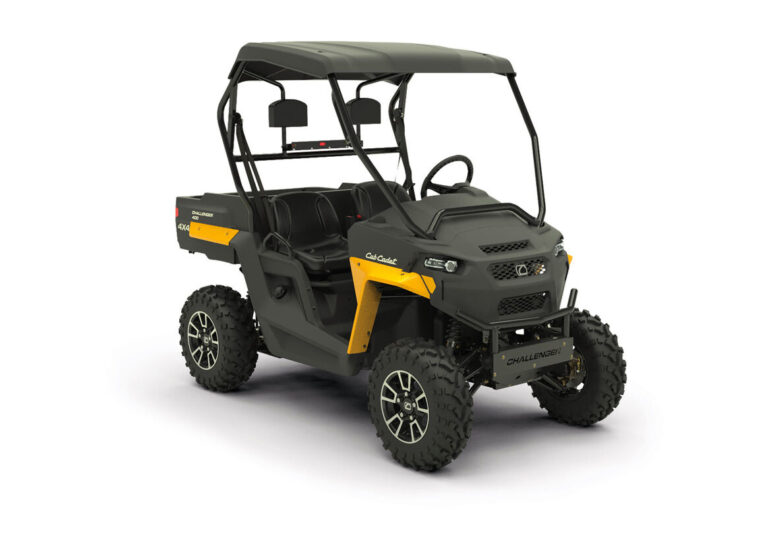
What stands out here is the Challenger 400’s emphasis on simple utility within a compact footprint, tailored primarily for light off-road tasks and farm chores. This machine, classified as a utility side-by-side, presents itself as a practical option for users who need dependable performance for work rather than high-speed recreation. Its design reflects a focus on simplicity and durability, with features aimed at making routine jobs more manageable.
Constructed around a 404 cc single-cylinder engine with air cooling and a carburetor, the Challenger 400 maintains a lightweight profile while providing enough torque for hauling and terrain traversal. The 4×4 drivelines ensure traction on varying surfaces, while the CVT transmission offers smooth, maintenance-free operation that minimizes driver input. Its dimensions and weight-measuring roughly 8.3 feet in length and weighing approximately 900 pounds-highlight its compact nature, ideal for navigating tight spaces or working in confined environments.
The machine’s suspension system balances cost and functionality with double A-arm front suspension for improved handling and a rigid rear design that favors durability over complex articulation. Hydraulic disc brakes front and rear deliver consistent stopping power, complementing the machine’s utility focus. The 24-inch tires with a narrow profile suggest it is intended for moderate off-road use, providing traction without excessive ground disturbance. The Challenger 400’s overall character positions it as an accessible option for small farms, property owners, or light-duty work applications, standing out in its segment through its simple engineering and practical feature set.
Performance & Powertrain
With 404 cc of engine displacement, the single-cylinder powerplant on the 2020 Cub Cadet Challenger 400 offers a balanced mix of torque and responsiveness suitable for light to moderate utility tasks. The 404 cc size falls within the typical range for entry-level utility UTVs, providing enough power for hauling, trail riding, and worksite duties without the excess of larger engines that can lead to increased fuel consumption and weight.
The air-cooled design simplifies maintenance and tends to be more resilient in dusty or muddy conditions, where water cooling systems could be prone to clogging. The carburetor fuel system, while older technology compared to fuel injection, delivers reliable throttle response and ease of adjustment, especially useful in varying altitude or temperature conditions common in outdoor environments.
The presence of a Continuously Variable Transmission (CVT) combined with a 4×4 driveline allows for a smooth, continuously adjustable power delivery that adapts to changing terrain. Unlike traditional gearboxes, the CVT eliminates the need for manual shifting, providing a seamless transition between speeds. This setup is particularly effective in off-road applications where varying traction requires rapid power modulation, such as climbing inclines or traversing uneven terrain.
this drivetrain configuration prioritizes ease of use and adaptability rather than raw performance. The engine’s torque characteristics and CVT transmission make the Challenger 400 suited for users seeking simple operation and consistent power delivery across a range of light utility and recreational activities, without the complexity or weight associated with larger, more powerful engines.
Suspension & Handling
With 8 inches of suspension travel at the front, this machine is designed to absorb impacts from uneven terrain, allowing for smoother rides over rocks, roots, or loose dirt. The double A-arm setup provides a flexible yet sturdy connection between the wheels and chassis, maintaining wheel alignment and stability during dynamic off-road maneuvers. On hardpack trails, this suspension allows for precise steering response, while on softer or more rugged surfaces, it helps prevent the vehicle from bouncing excessively, maintaining control and comfort.
The rigid rear suspension means there are no independent components at the back, which simplifies the design and reduces maintenance. While this setup limits rear wheel articulation compared to independent setups, it benefits applications requiring durability and lower cost, such as work tasks and simple trail riding. For terrain with significant obstacles or uneven surfaces, the lack of rear suspension travel can reduce comfort, but it increases durability and reduces potential points of failure on the rear axle assembly.
Braking is handled via hydraulic disc brakes on both the front and rear wheels, offering consistent stopping power across various terrains. Hydraulic discs provide better heat dissipation than drum brakes, which is crucial during prolonged downhill descents or heavy workloads. The 24 x 8-12 front tires and 24 x 9-12 rear tires balance grip and stability, with enough width to handle loose surfaces and rocky trails without excessive slip. These tire sizes also contribute to the machine’s ability to manage different terrain types without sacrificing maneuverability or traction, making it suitable for diverse off-road and work scenarios.
Dimensions & Ergonomics
If you’re planning to transport the Challenger 400 in a standard pickup truck, you’ll want to know that its length measures 8.29 feet and its width is 8 inches. These dimensions ensure it can fit comfortably in most full-size truck beds without overhanging or requiring disassembly, making it convenient for hauling between job sites or recreational destinations.
The vehicle stands 76 inches tall, providing enough clearance for most garages and storage spaces while maintaining a manageable height for easy mounting and dismounting. With a ground clearance of 5.5 inches, it can navigate uneven terrain without excessive risk of getting hung up on rocks or debris, though this height slightly limits its ability to cross larger obstacles at speed.
Weighing in at 900 pounds, the Challenger 400 strikes a balance between stability and maneuverability. The relatively narrow width of 8 inches contributes to agile handling, especially in tight trails or confined work areas. The seat height, while not explicitly specified, is designed to accommodate a broad range of riders, ensuring comfort for both shorter and taller users. Its 4-gallon fuel tank supports extended use without significant refueling stops, which is advantageous during long workdays or extended recreational outings.
Notable Features
If you’re planning to tackle rough terrain or work tasks that demand consistent power delivery, you’ll want to know how this model stands out from competitors at this price point. The Challenger 400 offers a handful of features that enhance its utility and user experience without dramatically increasing the cost. While many entry-level UTVs stick to basic hardware, this model incorporates design choices aimed at improving durability and control.
One of the key differences lies in its drivetrain and transmission setup. The inclusion of a continuously variable transmission (CVT) paired with a 4X4 drive system allows for smooth power delivery and better traction across various surfaces. This combination helps users navigate uneven terrain with less driver effort, especially in challenging conditions. Unlike manual or simpler automatic transmissions found in some rivals, the CVT offers seamless acceleration without needing to shift gears, which can be particularly advantageous during extended work sessions or recreational rides.
Additional features that distinguish this model include a simplified yet effective cooling and fuel system. The air-cooled, carburetor-fed engine, while basic, is designed for ease of maintenance and reliability in off-road environments. Though it lacks high-tech fuel injection or liquid cooling, the design emphasizes durability and simple serviceability-an important consideration for users who prefer to perform routine maintenance themselves. Furthermore, the model’s simple accessories and controls keep operation intuitive, making it accessible for both new and experienced operators.
While the Challenger 400 does not boast an extensive list of luxury features, its focus on core mechanical components and drivetrain innovations provides tangible value. The model’s design balances cost and function, prioritizing dependable performance over frills, which aligns well with users who need a reliable utility vehicle built to handle varied tasks without excessive complexity.
Pricing & Value
What stands out here is the $7,999 Manufacturer’s Suggested Retail Price (MSRP) for the 2020 Cub Cadet Challenger 400, positioning it within the entry-level utility side of the market. This pricing aims to attract customers looking for a budget-friendly machine that offers essential features without excessive frills, putting it in direct competition with other small-displacement UTVs in a similar price bracket.
At this price point, the Challenger 400 presents a package that balances basic utility with simplicity. It targets users who need a simple workhorse for light hauling, farm chores, or recreational use without the added cost of high-end technology, luxury features, or extensive aftermarket support often found in higher-tier models. While it lacks some advanced amenities, the price still reflects a machine built with durable components designed for regular duty, not heavy commercial operations.
Within Cub Cadet’s lineup, the Challenger 400 sits at the entry-level end of the spectrum. It is positioned below higher trim levels that may include added features like larger engines, upgraded suspensions, or more refined comfort packages. Moving one step above, models in the Challenger series might include 550 or 700 variants, which typically incorporate more power, improved payload capacities, or optional accessories, thus justifying a higher price. Conversely, models below this price are quite rare, as the Challenger 400’s value proposition centers on providing reliable performance at an accessible cost.
Given its price and the segment it targets, the Challenger 400 offers a reasonable value for customers seeking a basic, dependable utility machine. It does not overreach into luxury or high-performance territory but delivers core functionality at a fair cost. For those who prioritize affordability and simplicity over extensive features, this UTV aligns well with expectations, making it a sensible choice in its class rather than an overpriced option. Its value diminishes if buyers seek advanced features or higher durability for demanding tasks, but for light work and recreational activities, it remains a competitive entry-level option.
Final Thoughts
If you’re planning to tackle light utility tasks or recreational trail riding, you’ll want to know that the Challenger 400 prioritizes ease of use and affordability over high-end performance features. Its single-cylinder engine provides reliable power for typical farm chores or weekend adventures, but it falls short when faced with demanding workloads or technical terrain. The chassis design emphasizes a balance between stability and maneuverability, making it suitable for operators who value simple operation without excessive complexity.
The defining aspect of this machine is its simplicity. With a focus on user-friendly maintenance and predictable handling, it appeals to newcomers or those seeking a practical sidekick for everyday tasks. However, this emphasis on ease of use does come at the expense of advanced features like high-capacity cargo systems or sophisticated suspension setups. It’s a machine built for those who want a basic, no-fuss utility vehicle rather than a tool for heavy-duty or specialized applications.
Those needing a machine that can handle rigorous off-road conditions, high payloads, or extended work hours should look elsewhere. The Challenger 400 excels within its intended scope but isn’t designed for professional-grade tasks or intense trail riding. For users who require more strong performance or greater customization options, exploring other options with beefier engines, more sophisticated driveline systems, or enhanced suspension setups will be a better match. This is a vehicle aimed at casual users who prioritize simplicity and value over outright capability.