Overview
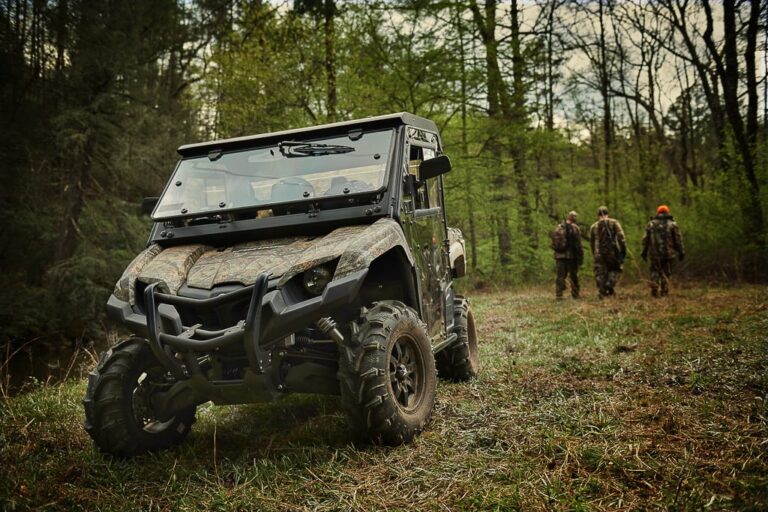
What stands out here is the Yamaha Viking’s focus as a utility side-by-side built for work and outdoor chores. With a single-cylinder 686cc liquid-cooled engine that injects fuel efficiently, it provides reliable power for hauling tools, materials, or gear across varied terrain. The machine’s design emphasizes practicality over sportiness, making it a practical choice for farmers, ranchers, or property owners needing a durable vehicle to get things done.
This is a machine that manages heavy-duty tasks by combining a proven engine with a simple CVT transmission and a selectable 4X2 or 4X4 drive mode. The independent double wishbone suspension with 8.1 inches of travel front and rear offers enough comfort for rougher jobs, while the dual hydraulic disc brakes provide consistent stopping power. Its dimensions and ground clearance of nearly 12 inches help it navigate uneven ground without getting stuck or damaged.
Targeted at users who prioritize dependability and simple function over high-speed thrills, the Viking offers a spacious, stable platform suited for work crews, outdoor enthusiasts, or those needing a dependable utility vehicle for farm or ranch use. What makes this model notable within its segment is Yamaha’s reputation for durability and ease of maintenance, along with its balanced blend of power, ground clearance, and affordability, making it a practical choice for everyday utility needs.
Performance & Powertrain
Pull up the throttle and you’ll find the 686cc single-cylinder engine in the Yamaha Viking delivers a steady, predictable power curve suited for work applications and trail riding alike. The liquid-cooled design keeps temperatures stable during long days of hauling or navigating rough terrain, preventing overheating that can sap performance in demanding conditions. Fuel injection ensures reliable starting and smooth throttle response, even when working in less-than-ideal fuel conditions or at high altitude.
This engine’s output sits comfortably within the segment’s norms, providing enough torque to handle hauling loads or towing accessories without feeling sluggish. The power delivery is linear, making it easier to modulate the throttle precisely when carrying heavy gear or maneuvering through tight spots. The engine’s design emphasizes durability and ease of maintenance, which pays off during extended use in work settings or rugged trail adventures.
The Viking employs a continuously variable transmission that keeps the engine revs in an optimal range, providing smooth acceleration and seamless shifts under load. The selectable 4X2 and 4X4 drive modes enhance traction when tackling muddy or uneven terrain, giving operators confidence to push through challenging conditions. This drivetrain setup emphasizes simplicity and reliability, with fewer moving parts than traditional gearboxes, which can translate into lower maintenance costs over time.
Suspension & Handling
If you’re planning to navigate a mix of trail conditions, you’ll want to know that the Yamaha Viking features independent double wishbone suspension on both the front and rear, with 8.1 inches of travel in each. This setup provides a smooth ride over uneven terrain, helping to absorb shocks from rocks, roots, and dips without transmitting excessive impact to the occupants. On well-maintained hardpack trails, this suspension remains composed, maintaining stability and control, while on rougher trail sections or work sites, it offers enough give to prevent jarring hits. The same travel figures highlight its design for moderate off-road work and trail riding, balancing comfort with control across different environments.
The braking system uses dual hydraulic disc brakes on both ends, which deliver strong, predictable stopping power. This braking setup is suited for handling quick stops on loose gravel or muddy surfaces, providing confidence whether you’re descending a hill or coming to a halt in tight spots. Since the system uses hydraulic discs, brake fade is less of a concern during extended use, making it a good choice for work-duty haulers or trail riders who need reliable stopping power in various conditions.
The tires on the Viking are AT25 X 8-12 in the front and AT25 X 10-12 in the rear, offering a balance of grip and durability across different terrains. Their all-terrain design gives solid traction on dirt, gravel, and mud, while still providing enough stability on paved surfaces. These tires are built to handle light to moderate off-road use but may not excel in extremely loose or technical trails, where larger or more aggressive tires might be preferable. the suspension, brakes, and tires combine to support a confident ride across a range of work and trail environments, making the Viking a dependable choice for utility riders who need a balanced setup.”
Dimensions & Ergonomics
If you’re planning to load the Yamaha Viking into a standard truck bed or need it to navigate narrow trails, you’ll want to know its size and fit. With a length of just over 10 feet and a width of 8 feet, it offers enough stability for rough terrain without being overly bulky for transportation or storage. The 75.8-inch height means it remains accessible for most riders, yet tall enough to clear obstacles comfortably.
The wheelbase measures 84.1 inches, providing a balanced stance that enhances stability at speed and when hauling cargo. The ground clearance of 11.8 inches allows the Viking to clear rocks and roots without scraping, making it suitable for off-road adventures and work environments where uneven surfaces are common. Its dry weight sits around a few hundred pounds more than a comparable side-by-side, which helps with traction and handling but still keeps it manageable for one person to tow or move if needed.
The seat height is designed to accommodate a range of rider heights, with an ergonomic position that supports long hours in the seat without excessive fatigue. The 9.7-gallon fuel tank extends range, reducing stops during extended work sessions or trail rides. Cargo capacity isn’t just about storage but also how comfortably riders can access and manage gear, with the Viking’s dimensions and ergonomic layout catering to utility-minded users who need both space and comfort during demanding tasks.
Notable Features
Anyone running work tasks or outdoor adventures will appreciate the enhancements that set this model apart from earlier versions and competitors in its price class. Yamaha has upgraded the fuel injection system, resulting in more consistent throttle response and better fuel efficiency compared to the carbureted models of the past. This change makes it easier to operate in varied conditions without sacrificing performance or reliability.
Another notable update is the inclusion of a selectable four-wheel-drive system. This feature provides a simple switch to choose between 2WD and 4WD modes, giving drivers the ability to adapt quickly to changing terrain or load conditions. It enhances traction and stability without the need for complex controls or heavy modifications, adding value for those who frequently operate in uneven or muddy environments.
The addition of a larger cargo bed with integrated tie-down points improves hauling capacity and convenience. The bed’s increased size allows for more gear or materials to be transported in a single trip, while the tie-downs help secure loads for safe transport. This focus on usability is complemented by a digital display that provides essential information such as speed, fuel level, and warning indicators, streamlining the driving experience and allowing for quick checks on the go.
Pricing & Value
If you’re planning to tackle farm work, trail hauling, or heavy-duty tasks, you’ll want to know that the 2018 Yamaha Viking has an MSRP of $11,999. This places it squarely in the mid-range utility side of Yamaha’s lineup, competing against machines that often range from around $10,500 to $13,500 depending on features and trim levels.
At this price point, the Viking offers a package that leans toward the practical side without sacrificing comfort or load capacity. It isn’t the least expensive utility UTV on the market, but it doesn’t push into premium territory either. When you compare it to similarly priced machines from other brands, Yamaha’s reputation for durability and refined ride quality helps justify the cost, especially for those who prioritize long-term reliability over flash or tech features.
The Viking slots between Yamaha’s entry-level models and their more feature-rich offerings. The base trims are more stripped down and aimed at budget-conscious buyers or those who want a simple, work-focused utility machine. Moving up to higher trims, you get added accessories, better creature comforts, and sometimes more power or payload capacity, which can raise the price by $2,000 or more. In that context, the Viking’s current price seems fair-offering good value for someone who needs a dependable workhorse without the bells and whistles of more expensive options.
the Yamaha Viking strikes a reasonable balance for its segment. It’s priced to appeal to buyers who want durability and simple utility without paying for unnecessary extras. For the average working or trail rider, this machine offers a compelling mix of price and function, making it a worthwhile choice within the mid-range utility UTV market.
Final Thoughts
If you’re planning to tackle farm work, outdoor hauling, or land management tasks, you’ll want to know that the Yamaha Viking offers a practical blend of durability and simple utility. Its design focuses on providing a reliable workhorse that can handle demanding chores without fuss, making it a sensible choice for property owners or small business operators looking for a dependable machine that gets the job done. This model’s strength lies in its simplicity and proven performance, but it doesn’t cater to those seeking high-speed trail riding or aggressive sport driving.
The single most defining feature of the Viking is its emphasis on long-term dependability and ease of maintenance. Yamaha has a reputation for building machines that last, and the Viking’s design reflects that legacy. Its simple construction means fewer parts to worry about and a faster service time, which is a key selling point for users who want to minimize downtime. If your priority is a machine that consistently performs day after day and can be kept running with minimal fuss, then this UTV fits that need perfectly.
This machine excels for users who need a work-focused utility vehicle that can handle rough terrain and heavy loads without breaking the bank. It’s less suited for riders who want a high-performance, adrenaline-fueled side-by-side or for those looking for a plush, feature-rich cabin. If resale value is a concern, Yamaha’s reputation for durability helps maintain a reasonable secondhand price, but keep in mind that this is a practical work machine rather than a collector’s item.
Choose the Yamaha Viking if your main goal is reliable, no-nonsense utility. It offers a clear-cut approach to everyday tasks, with the confidence of Yamaha’s proven engineering backing it. If you need a hardworking UTV that’ll serve faithfully year after year, this machine deserves serious consideration.