Overview
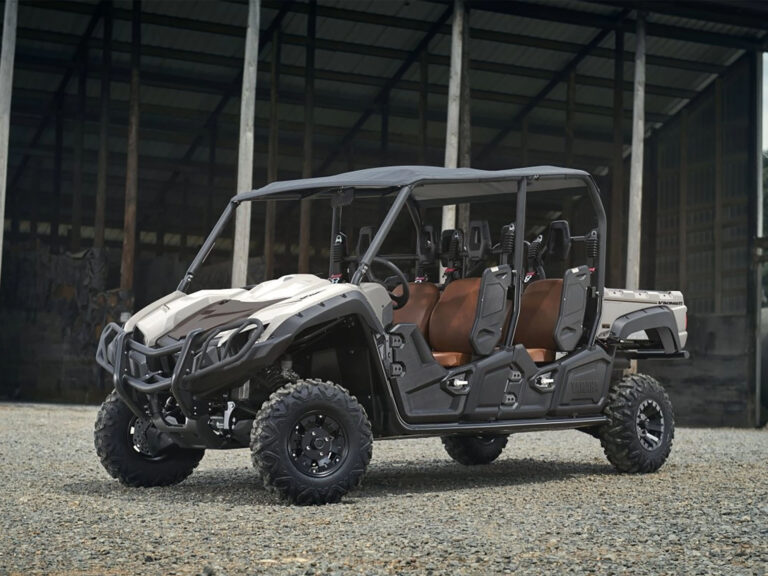
What stands out here is the Yamaha Viking VI EPS, a utility side-by-side designed to handle demanding tasks while offering a spacious cabin for multiple passengers. Built primarily for workhorse duties, this vehicle blends a durable 686cc liquid-cooled single-cylinder engine with a fuel-injected system, ensuring dependable performance over long hours. Its price point of $14,299 positions it in the mid-range for utility UTVs, targeting buyers who need a purpose-built work platform that can also serve as a reliable means of transportation on rugged terrain.
This machine is constructed to carry heavy loads and transport multiple occupants with a focus on durability and ease of use. Its drivetrain features a continuously variable transmission paired with a selectable four-wheel-drive system, allowing users to switch between 4X2 and 4X4 modes depending on terrain conditions. The suspension setup employs independent double wishbone arms front and rear, with 8.1 inches of travel in both axles-an indication that Yamaha prioritized a smooth ride over uneven ground while maintaining stability when fully loaded. The ground clearance of 11.4 inches supports navigating over obstacles without snagging on rough surfaces.
Designed with practicality in mind, the Viking VI EPS incorporates dual hydraulic disc brakes on both ends, providing stopping power suited for its utility role. Its dimensions-153.5 inches in length and 61.8 inches wide-along with a 115.6-inch wheelbase, create a stable platform that can accommodate multiple passengers comfortably. With a 9.7-gallon fuel capacity, it is suited for extended work shifts or recreational outings without frequent refueling. What makes this model notable within its segment is its balance of power, capacity, and user-focused features, making it a go-to option for those needing a dependable, work-oriented utility vehicle that can also handle recreational duty when required.
Overview
What stands out here is the Yamaha Viking VI EPS, a utility vehicle built to serve demanding worksite and outdoor recreation needs with a focus on durability and practicality. It belongs to the large side-by-side segment, designed primarily for farming, ranching, or heavy-duty hauling, where reliability and capacity take precedence over high-speed performance. Its 686cc single-cylinder liquid-cooled engine, coupled with fuel injection, offers enough torque for pulling and hauling tasks, while maintaining a manageable size for operators who need a machine built for steady, consistent work.
This model emphasizes load-carrying ability and passenger capacity, as evidenced by its three-row seating arrangement. Its design supports a broad target audience that values comfort and ease of operation in rugged environments. The 153.5-inch length and 11.4-inch ground clearance indicate a machine suited for rough terrain, able to navigate uneven fields or job sites without sacrificing stability. The twin independent double wishbone suspension with 8.1 inches of travel both front and rear ensures a smoother ride over bumps, which is crucial for long shifts or extended outdoor use.
At $14,299, the Viking VI EPS positions itself as a mid-range utility vehicle, offering a balance between affordability and functionality. It features a CVT transmission with selectable 4X2 and 4X4 drive modes, catering to users who need to switch between on-road and off-road conditions. The dual hydraulic disc brakes front and rear provide consistent stopping power. What makes this model particularly notable within its segment is its combination of substantial cargo capacity, passenger comfort, and a drivetrain that’s built for steady work rather than high-speed thrills, making it a dependable choice for those who require a workhorse with comfortable seating and reliable performance.”
Performance & Powertrain
Anyone running work tasks or trail adventures will appreciate the 686cc single-cylinder engine under the hood. Its liquid cooling system ensures consistent performance during prolonged use, preventing overheating even under strenuous conditions. The fuel-injected setup delivers precise throttle response and efficient fuel consumption, which is advantageous in both work and recreational environments where reliability and economy matter.
With a power output that exceeds many segment competitors with similar displacement, this engine provides a noticeable boost in torque and acceleration. The single-cylinder configuration tends to favor low-end and mid-range responsiveness, making it suited for hauling loads, towing, or navigating rugged terrain where immediate throttle response can make a difference. The engine’s design emphasizes durability and simple maintenance, aligning well with the utility purpose of the vehicle.
The CVT transmission translates engine power efficiently to the drive wheels, maintaining optimal engine speed for different tasks. The system’s ability to continuously adapt to load and terrain conditions ensures smooth acceleration and deceleration without shifts, which benefits operators working in demanding environments. The selectable 4X2 and 4X4 drive modes add versatility, allowing for better traction when needed, whether on slippery surfaces or uneven terrain.
Performance & Powertrain
Anyone running work tasks or towing loads will appreciate the 686cc single-cylinder engine that powers the 2020 Yamaha Viking VI EPS. This engine size exceeds many utility side-by-sides in its segment, offering increased torque and better response during heavy-duty hauling or trail riding. The liquid cooling system helps maintain consistent engine temperatures under prolonged operation, making it suitable for extended work days or challenging terrain.
The fuel injection system ensures precise throttle control and maintains fuel efficiency, especially important for long hours of use in remote or rugged environments. Power delivery from this setup tends to be smooth with a linear torque curve, providing steady acceleration and controllable power for carrying loads or navigating uneven terrain. This engine’s characteristics favor applications requiring reliable low-end torque rather than high-revving performance, aligning with typical utility tasks.
The transmission employs a Continuously Variable Transmission (CVT), which allows for seamless power transfer without the need for shifting gears. This setup enhances ease of use, especially when maneuvering through tight spots or adjusting to varying terrains. The drive system features a selectable 4X2 or 4X4 mode, giving the operator control over traction for different conditions. Whether engaging 4X4 for tough, off-camber slopes or sticking with 4X2 for lighter tasks, the drivetrain offers adaptability that matches the demands of utility use.
Suspension & Handling
If you’re planning to navigate a mix of trail conditions and work terrains, you’ll want to know that this machine features independent double wishbone suspension both at the front and rear, each with 8.1 inches of travel. This setup provides a balanced ride, absorbing bumps on uneven ground while maintaining stability. On smooth, hard-packed trails, the suspension’s travel allows for precise handling, but when encountering rougher terrain or loose gravel, it helps mitigate harsh impacts and keeps the tires in contact with the ground.
The dual hydraulic disc brakes on both the front and rear deliver consistent stopping power across various terrains. Hydraulic discs are less prone to fade under repeated use and provide reliable modulation, which is crucial when descending steep slopes or navigating technical obstacles. For tire grip, the front tires measure 25 inches by 8 inches, while the rear tires are 25 inches by 10 inches. The larger rear tires increase traction and stability during heavy hauling or climbing, especially on soft or loose surfaces, while the narrower fronts improve maneuverability on tighter trails and work sites.
Combined, these suspension and brake components are designed to handle a broad array of demands, from delicate trail riding to demanding work environments. The tire sizes complement this by offering a good balance between ground contact and maneuverability, ensuring that the vehicle maintains control whether you’re climbing, descending, or navigating tight turns. This setup emphasizes a focus on durability and predictable handling, making it suitable for diverse outdoor tasks and trail conditions.
Suspension & Handling
If you’re planning to navigate a variety of terrain types, you’ll want to know that this utility vehicle features independent double wishbone suspension at both ends, with 8.1 inches of travel in the front and rear. This setup provides a balanced combination of ride comfort and obstacle clearance, making it suitable for uneven trail surfaces as well as work sites with loose gravel or dirt. The equal travel on both axles helps maintain stability and control when crossing rough terrain or carrying heavy loads, ensuring the vehicle responds predictably across different conditions.
The dual hydraulic disc brakes on both the front and rear deliver strong stopping power with consistent modulation, essential for controlling speed on steep descents or when maneuvering around obstacles. These systems provide reliable fade resistance and are suited to demanding work environments where precise braking is critical. The choice of dual discs in both axles enhances the vehicle’s ability to handle aggressive braking without compromise, even under heavy use or in adverse conditions.
The tire setup features 25-inch diameter tires with widths of 8 inches at the front and 10 inches at the rear, mounted on 12-inch wheels. These dimensions strike a compromise between traction and stability, with the larger rear tires offering increased grip during pulling or hauling tasks and improved flotation over soft surfaces. The tread pattern and rubber compound are optimized for grip on loose dirt, gravel, and rocky terrain, helping to prevent slippage and maintain control during demanding activities. the suspension, brakes, and tires work together to ensure the vehicle handles confidently across a range of work and recreational environments.
Dimensions & Ergonomics
Most utility vehicles in this segment offer a length around 153.5 inches, a width close to 61.8 inches, and a height of approximately 76.6 inches, and this machine aligns with those figures. The length provides enough bed space for carrying gear and supplies while remaining manageable for loading into a standard pickup truck. The width ensures stability during operation without making the vehicle cumbersome to maneuver in tighter spaces or narrow trails. The seat height and overall dimensions are designed to accommodate a broad range of rider sizes, with a height of 76.6 inches supporting comfortable visibility and ease of access.
The wheelbase measures 115.6 inches, a dimension that contributes to both stability and ride comfort. Longer wheelbases tend to reduce pitching during acceleration and deceleration, which benefits operators working over uneven terrain. With ground clearance of 11.4 inches, this model can traverse moderately rough terrain without excessive risk of bottoming out, supporting work and recreation tasks in varied environments. The vehicle’s overall size makes it practical for fitting into a standard truck bed, with enough clearance for secure tie-downs and cargo loading.
Fuel capacity is 9.7 gallons, providing a reasonable range between refills for extended workdays or trail adventures. The ergonomic design of the seating and controls caters to a wide spectrum of rider heights, with an emphasis on comfort during prolonged use. The combination of dimensions and ergonomic considerations enhances both utility and rider confidence, ensuring the machine can handle payloads efficiently while maintaining maneuverability and comfort across diverse tasks.
Dimensions & Ergonomics
Most utility side-by-sides in the segment are designed with a balance between stability and practicality, and the Yamaha Viking VI EPS aligns with these expectations through its dimensions. At 153.5 inches long, it offers enough length to accommodate a sizable cargo bed and multiple riders without feeling cumbersome in tight spaces. Its 61.8-inch width provides a stable footprint, ensuring good lateral stability during off-road use or when carrying heavy loads, while still fitting within the width constraints of most trails and parking areas.
The vehicle’s height of 76.6 inches allows for sufficient headroom and comfort for taller operators without compromising its center of gravity. A wheelbase of 115.6 inches contributes to smooth handling and improved ride quality, especially when traversing uneven terrain. Ground clearance measures 11.4 inches, exceeding segment averages and enabling the Viking VI EPS to clear rocks and roots without excessive body lift. Its 9.7-gallon fuel capacity supports extended use in the field, reducing the need for frequent refueling on longer outings.
Equally important is the seating height, which is designed to suit a wide range of riders. While exact seat height details aren’t specified here, the overall dimensions suggest a seat height that offers a manageable entry for shorter riders while accommodating taller operators comfortably. The vehicle’s width and ground clearance also contribute to a stable ride, especially when carrying gear or navigating rough trails. The overall size and ergonomic considerations aim to strike a balance between utility and rider comfort, ensuring it can handle diverse tasks without sacrificing maneuverability or ease of access in a work or recreational setting.
Notable Features
What stands out here is Yamaha’s inclusion of a liquid-cooled, fuel-injected 686cc single-cylinder engine, which offers a good balance of power and efficiency for a utility side-by-side in this price range. This setup provides reliable performance while maintaining manageable heat levels during extended use, a critical factor for multi-hour work sessions or trail rides.
- Selectable four-wheel drive with a simple switch, allowing operators to adapt to changing terrain without complex procedures
- CVT transmission with a push-button low-range mode, providing smooth power delivery across varied workloads
- Integrated cargo bed with a 600-pound capacity, designed for practical hauling tasks and easy access
- Convenient electric power steering (EPS), reducing driver fatigue and improving maneuverability in tight spots
While the Viking VI EPS does not come with advanced tech like digital displays or infotainment systems, its combination of a strong engine, adaptable drive system, and ergonomic features makes it a practical choice for work and play. The model’s focus remains on reliable performance and user convenience, with features tailored to enhance everyday utility and reduce operator effort.
Notable Features
What stands out here is Yamaha’s deliberate focus on integrating key technological and convenience upgrades into the Viking VI EPS, distinguishing it from base-trim competitors or previous model years. These enhancements are designed to improve user experience, safety, and operational ease, especially for those relying on the machine for demanding work or extended outdoor adventures.
- Electric Power Steering (EPS) system that adjusts to rider input for reduced fatigue and improved handling
- Heavy-duty cargo bed with integrated tie-down points, increasing utility for hauling gear and supplies
- Standard tilt steering column for easier driver ergonomics and customization
- Digital gauge cluster providing real-time information on speed, engine temperature, fuel level, and maintenance alerts
- Enhanced lighting system, including LED headlights and taillights, for better visibility during low light conditions
Compared to earlier models, Yamaha has made a conscious effort to incorporate these features without significantly increasing the price point. While some competitors still rely on basic setups, Yamaha’s inclusion of advanced steering, improved lighting, and informative gauges delivers tangible value for users who prioritize operational efficiency and comfort in demanding environments. Such upgrades reflect Yamaha’s recognition that modern utility vehicles must do more than just move payloads-they must also support operator wellbeing and confidence over the long haul.
Pricing & Value
Most utility side-by-sides in the segment are priced around $14,000 to $16,000, making the Yamaha Viking VI EPS at $14,299 a competitive entry point for a six-passenger capacity. Yamaha positions this model as a mid-tier offering within its lineup, aimed at families or work crews needing a balance between price and functional features. Compared to higher-trim models that can push past $16,000 with additional comforts or accessories, the Viking VI EPS provides a strong value proposition for its target audience.
Yamaha’s pricing places it squarely in the middle of the segment, not as an entry-level option but not at the top end either. Its position in the lineup permits some differentiation from less equipped models, often offering features like electronic power steering, which enhances maneuverability and reduces rider fatigue. Moving up to Yamaha’s premium trims introduces more creature comforts and warranty packages, but the core package of the Viking VI EPS remains well-priced relative to similar six-passenger utility machines from competitors like Polaris or Can-Am, which frequently list in the $14,500 to $15,500 range.
Considering the specifications and features, the Viking VI EPS offers a compelling mix of seating capacity, durability, and Yamaha’s reputation for reliability. The price-to-value ratio is favorable because it delivers substantial payload and passenger capacity with a mid-range price that appeals to both recreational users and commercial operators who prioritize long-term affordability. While not the cheapest in the segment, the model’s feature set justifies its cost, especially for buyers seeking a dependable utility vehicle that can handle both work and recreational demands without immediate upgrade pressure.
Pricing & Value
Most utility ATVs in the segment hover around the $14,000 to $16,000 mark, and the Yamaha Viking VI EPS at $14,299 positions itself at the lower end of that range. This price point makes it accessible for consumers seeking a multi-passenger utility vehicle without stepping into premium territory. Given its size and feature set, it appeals to buyers who prioritize seating capacity and working load over high-performance specifications or luxury features.
Within Yamaha’s lineup, the Viking VI EPS occupies the mid-tier position. It is priced above the single-row Viking models but below more premium variants that may include additional features or upgraded trim levels. The immediate competitors often range within a similar $13,000 to $15,000 band, so the Viking VI EPS aligns closely with industry standards. Its price reflects a package designed to balance utility functions with user-friendly technology, making it an attractive choice for both work and recreational use.
Assessing the value proposition, the Yamaha Viking VI EPS offers a compelling package for its price. Its seating capacity for six, combined with Yamaha’s reputation for durable powertrains and reliable build quality, justifies the cost for many buyers. While some competitors might offer more bells and whistles, the core utility and brand consistency deliver a level of reassurance that can outweigh minor price differences. In this context, the Viking VI EPS does not appear overpriced but rather fairly priced considering its segment and intended application.
Final Thoughts
If you’re planning to haul cargo or carry multiple passengers across variable terrain, you’ll want to know that the Yamaha Viking VI EPS offers a spacious cabin with a high payload capacity and a heavy-duty chassis designed for heavy-duty work. Its configuration is optimized for utility tasks, making it a practical choice for rural farms, large families, or commercial operators who need reliability over long hours of operation.
The defining quality of the Viking VI EPS lies in its ability to balance load capacity with comfort and ease of use. The machine features a proven engine and a well-engineered suspension that can handle the demands of uneven terrain without sacrificing stability or rider confidence. Its electronic power steering further enhances maneuverability, especially when navigating tight corners or congested work sites.
This model is best suited for users prioritizing utility, durability, and a large crew capacity. Those seeking high-speed trail performance, aggressive sport riding, or a lightweight, nimble machine should consider other options. The Yamaha Viking VI EPS excels in environments where strength, endurance, and consistent performance take precedence over outright speed or agility. For those needs, this machine stands as a dependable workhorse built to deliver day after day without disappointment.
Final Thoughts
If you’re planning to transport a group of four or more across rough terrain, you’ll want to know that the Yamaha Viking VI EPS offers a spacious and stable platform with a focus on utility and comfort. Its large four-passenger cab and purpose-built 686cc engine deliver enough performance for farm work, trail riding, or heavy-duty hauling, making it suitable for those needing a dependable workhorse with family-friendly features. The model’s emphasis on passenger capacity and load-carrying ability makes it a practical choice for users who prioritize practicality over outright sportiness or high-speed agility.
The most defining quality of this machine is its ability to combine a substantial payload and passenger capacity with a smooth ride over uneven terrain. The Viking VI EPS’s reinforced chassis and reliable powertrain support extended hauling and long hours on the trail or job site. However, its considerable size and weight can compromise maneuverability in tight or technical situations. It excels when stability and load capacity are more critical than nimbleness or aggressive off-road performance.
This machine should attract those who need a durable utility vehicle that comfortably accommodates multiple riders and gear without sacrificing performance. Conversely, users seeking high-speed trail riding, aggressive cornering, or intense single-track adventure should look toward more sport-oriented models. For anyone demanding a purpose-built, well-balanced utility side-by-side with a focus on passenger comfort and load capacity, the Yamaha Viking VI EPS remains a dependable, no-nonsense choice that prioritizes function over form. It delivers on the promise of a durable, work-ready utility vehicle for serious users.