Overview
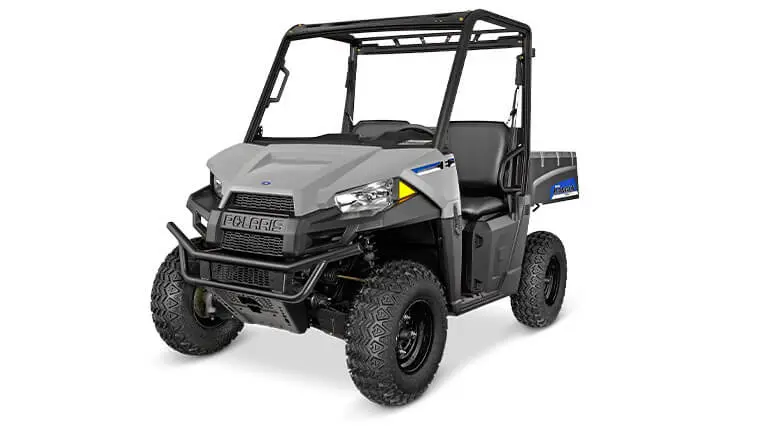
What stands out here is the shift towards electric power in a utility vehicle designed primarily for work and light-duty tasks. The 2015 Polaris Ranger EV embodies a segment that values low emissions, reduced noise, and simplified maintenance, making it appealing to operators who spend extended hours outdoors or in sensitive environments. With a 48-volt electric drivetrain and automatic transmission, this machine offers a quiet, emission-free alternative to traditional gas-powered UTVs, emphasizing ecological responsibility without sacrificing utility.
This machine is built for users who need a dependable, low-maintenance vehicle for farm chores, landscaping, or light hauling. Its design emphasizes ease of use and comfort, integrating independent double A-arm suspension and McPherson strut up front for a smooth ride over rough terrain, while hydraulic disc brakes ensure reliable stopping power. Its compact dimensions and modest weight allow for maneuverability in tight spaces, making it suitable for tasks that require agility rather than brute strength.
Target buyers include eco-conscious operators, small-business owners, and recreational enthusiasts who prefer quiet operation and minimal environmental impact. The Ranger EV’s primary appeal lies in its electric powertrain, which was a notable innovation for utility vehicles at the time. While it forgoes the raw torque and range of larger gas engines, it compensates with low operating costs and instant torque delivery, setting it apart within its segment.
Performance & Powertrain
Unlike traditional internal combustion engines, this electric setup provides a linear power curve, making throttle response predictable and smooth, ideal for precise work or navigating tight trails. The absence of a fuel system simplifies maintenance and eliminates emissions, but it also means the vehicle relies solely on battery energy, which influences range and operational time.
The motor is cooled by an integrated liquid cooling system that manages heat generated during extended use, preventing overheating and maintaining consistent performance. The electric powertrain is paired with an automatic transmission, which simplifies operation by continuously adjusting torque delivery without driver intervention. This setup suits tasks that demand consistent power output, such as hauling supplies or working in rugged, off-road environments where constant throttle modulation might be necessary.
The drive system utilizes a selectable 4X2 or all-wheel drive (AWD) mode, allowing users to adapt to differing terrains. In 4X2 mode, power is sent only to the rear wheels, reducing energy consumption and simplifying the drivetrain for smoother pavement or light-duty tasks. When engaged in AWD, power distribution is managed electronically to improve traction on loose or uneven surfaces. The combination of electric motor characteristics with these drivetrain options makes the Ranger EV suited for a variety of utility applications, from farm work to outdoor recreation, where responsive handling and reliable torque are essential.
Suspension & Handling
If you’re planning to traverse a variety of terrains, you’ll want to know how the suspension setup manages shock absorption and stability across different surfaces. The Polaris Ranger EV employs a front McPherson Strut suspension with 9 inches of travel, which is a common choice in utility vehicles designed for light trail work and uneven terrain. This configuration offers predictable handling on moderately rough ground, providing enough cushion to absorb bumps without excessive body roll, though it may feel stiff on very rocky or deeply rutted trails. The use of a McPherson Strut simplifies the front end design, reducing weight and maintenance needs while maintaining adequate performance for typical off-road tasks.
The rear suspension features independent double A-arms with an identical 9 inches of travel, enhancing articulation and wheel contact with uneven surfaces. This setup is especially beneficial when navigating loose gravel, dirt, or work sites with irregular terrain, as it maintains tire contact and improves traction. While 9 inches of travel is not excessive, it strikes a balance that favors durability and ease of maintenance over maximum wheel travel, making it suitable for light to moderate off-road use. The independent nature of the rear A-arms allows each wheel to react individually to terrain variations, improving ride comfort and control.
Braking is handled by hydraulic disc systems on both front and rear, providing strong stopping power and consistent pedal feel. Hydraulic disc brakes are better suited for the demands of utility work and trail riding where modulation and fade resistance are critical. The Carlisle 25 X 9-12 tires, with their large volume and knobby tread pattern, contribute significantly to grip on loose or uneven terrain. These tires are optimized for dirt, gravel, and mud, offering enough sidewall height to absorb impacts while maintaining a broad contact patch for traction. Their rugged construction and tread design ensure that the vehicle can handle a variety of off-road conditions without sacrificing durability or grip.
Dimensions & Ergonomics
With a length of 9.17 feet, the Polaris Ranger EV presents a compact footprint that allows for easy navigation in tight work environments or storage in standard pickup truck beds. Its narrow 9-inch width contributes to a stable, manageable ride while maintaining enough width for basic stability during off-road or work tasks. The overall height of 73 inches positions the machine well for taller operators without feeling overly tall or unwieldy.
The wheelbase measures 72 inches, providing a balanced platform that supports predictable handling and ride quality, particularly when traversing uneven terrain. Ground clearance of 10 inches helps clear obstacles commonly encountered on trails or work sites, while also influencing the vehicle’s center of gravity. This height contributes to confident maneuverability without excessive tipping risk, especially for larger loads or when traversing rough surfaces.
At a dry weight of 1726 pounds, the Ranger EV carries enough mass to feel stable on varied terrain, yet remains light enough to be loaded onto a truck or trailer for transport. The seat height is designed to accommodate a range of riders, offering enough elevation for visibility and control while not being so high as to challenge shorter operators. This ergonomic balance enhances comfort during extended use and improves overall control in demanding situations.
Cargo capacity and fuel range are integral to its practical design. The machine’s dimensions allow for manageable cargo space, and while the electric powertrain eliminates traditional fuel concerns, the overall size ensures the vehicle fits comfortably within typical work or recreational setups. These measurements align with the needs of users requiring a compact, stable, and ergonomically sound utility vehicle that performs reliably across diverse tasks.
Notable Features
What stands out here is the shift toward electric powertrains in a segment traditionally dominated by internal combustion engines. The 2015 Polaris Ranger EV introduces an electric motor with no need for fuel, which marks a significant departure from its petrol-powered predecessors and competitors. This model emphasizes quiet operation, low emissions, and reduced maintenance, appealing to users who prioritize environmental considerations and lower operating costs.
- Electric drivetrain with instant torque response, enhancing low-speed performance
- Selectable drive modes between 4X2 and all-wheel drive, allowing users to tailor traction to specific terrains
- Automatic transmission simplifies operation, removing the need for clutching or shifting
- Onboard battery management system designed for longevity and safety
- Additional accessories like a full cargo bed and utility racks, common in utility vehicles but enhanced here for electric application
While it might lack some of the traditional range and power of gas-powered counterparts, the Polaris Ranger EV’s technical choices make it suited for applications where quiet operation and low emissions are priorities. Its design is optimized for tasks on farms, large properties, or work sites where refueling stops are inconvenient or undesirable. The inclusion of selectable drive modes provides a practical advantage for navigating varied terrains, making this model stand out among electric utility UTVs within its price bracket.
Pricing & Value
Among utility UTVs priced around $11,300, the Polaris Ranger EV positions itself as an electric alternative aimed at users seeking a quiet, emission-free workhorse. This segment has seen increased interest from commercial operators and environmentally conscious consumers, and Polaris has crafted this model to appeal to those who want electric convenience without sacrificing utility. The price reflects the integration of electric drivetrain technology, which typically commands a premium compared to traditional gas-powered counterparts.
Within Polaris’s lineup, the Ranger EV falls into the mid-tier category, occupying a space above basic utility models but below their higher-end or commercial-grade offerings. The entry-level options usually feature less sophisticated features or lower load capacities, while the premium models add options like larger cargo beds, advanced lighting, or more sophisticated accessory integration. The Ranger EV’s price point suggests it’s aimed at consumers who value quiet operation and low ongoing fuel costs, but don’t necessarily need the maximum payload or rugged features found on higher trims.
When weighing the cost against the package, the Ranger EV offers a compelling value proposition if its electric drivetrain aligns with the user’s operational needs. Electric motors provide smooth power delivery and reduce maintenance costs associated with internal combustion engines, but the initial price premium can be significant. For fleet operators or landowners prioritizing low noise and zero emissions, the electric powertrain justifies the added expense. However, for those whose primary concern is maximum payload or off-road capability, traditional gas models may deliver more immediate value for a similar or lower initial price.
the $11,299 price tag is fair within the context of electric utility vehicles and reflects Polaris’s investment in EV technology. It’s priced higher than comparable gas-powered models but offers a distinct advantage in quiet operation and lower operational costs. For buyers who want to make an environmentally conscious choice without sacrificing utility, the Ranger EV presents a well-considered package that justifies its premium in this segment. For those strictly chasing raw power or payload capacity, conventional models at similar or lower prices may be more appropriate, but they lack the electric advantages that Polaris emphasizes.
Final Thoughts
What stands out here is the electric powertrain that delivers quiet operation and zero emissions, making this machine ideal for users who prioritize environmentally conscious work or recreation in noise-sensitive environments. The absence of an internal combustion engine simplifies maintenance and reduces operational costs over time, appealing to those who want a machine that’s easier to keep in service. However, this focus on electric propulsion means limited range and runtime compared to gas-powered counterparts, which could be a significant factor for users with demanding or extended use cases.
The interesting choice Polaris made was to equip the Ranger EV with a 48-volt AC induction motor paired with a sealed lead-acid battery pack. This configuration provides enough torque for typical utility tasks but also imposes constraints on payload capacity and on-the-fly recharging during long shifts. The emphasis on a battery-powered system shapes every aspect of the vehicle’s usability-its weight distribution, chassis reinforcement, and energy management systems are all optimized around this core design principle.
This is a machine that handles dirt, hauling, and light towing by doing its job quietly and with minimal fuss, but it isn’t built for heavy-duty off-road adventures or extended, high-demand cycles without access to charging infrastructure. The defining feature is its electric drive, which makes it suitable for farm use, golf course maintenance, or quiet neighborhood work where internal combustion fumes and noise are undesirable. Those looking for maximum power, range, or rugged off-road capabilities should consider more traditional gas models or newer electric entries with larger batteries and advanced drivetrains. For users who want a clean, low-maintenance utility vehicle for moderate tasks, the Polaris Ranger EV stands as a practical choice.”