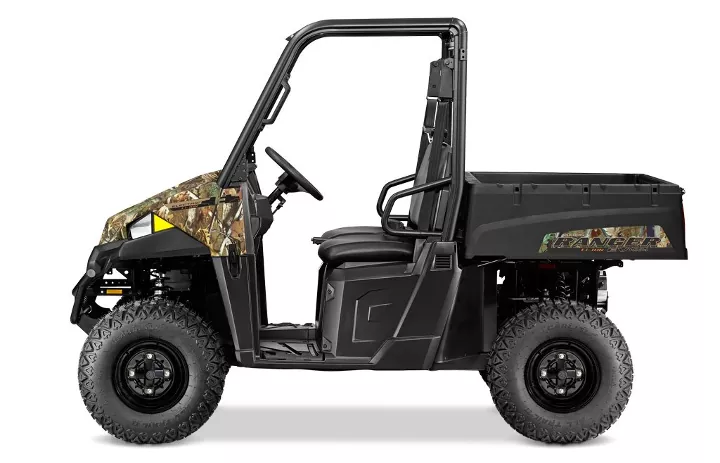
Overview
What stands out here is the 2016 Polaris Ranger EV’s focus on clean, quiet operation combined with practical utility. As an electric utility vehicle, it is designed primarily for work tasks that benefit from silent running and emission-free operation, making it ideal for farms, ranches, or maintenance jobs where noise and fumes are concerns.
This model emphasizes ease of use with an automatic transmission and selectable 4X2 or all-wheel-drive modes, giving operators the flexibility to adapt to different terrains or workloads. The Ranger EV’s chassis and suspension are tuned for stability and comfort, with McPherson Struts up front and independent double A-arm suspension at the rear, providing roughly nine inches of wheel travel on each end. Its dimensions and ground clearance suggest it can navigate uneven terrain while maintaining a manageable size for tight work environments.
Designed for buyers seeking a reliable, low-maintenance workhorse, the Ranger EV targets those who prioritize environmental friendliness and low operating costs. Its electric powertrain eliminates fuel costs and reduces maintenance needs, appealing to users who want a machine that’s economical to run over the long term. While it might lack the raw power of gas-powered counterparts, it compensates with quiet operation and smooth delivery, making it a standout choice within the utility UTV segment for specific applications.
Performance & Powertrain
Pull up the throttle and this electric utility vehicle delivers instant torque, making it suited for tasks that require quick response and steady power delivery.
The electric powertrain means there’s no traditional fuel system involved; instead, energy is stored in a lithium-ion battery pack, which simplifies maintenance and reduces noise. The absence of an internal combustion engine also means fewer moving parts, contributing to lower routine service needs. The transmission features an automatic setup, ensuring smooth shifts regardless of load or terrain, while the selectable four-wheel drive options give drivers control over traction, whether they’re driving in 2WD or switching to all-wheel drive for rougher conditions.
In terms of driving experience, this setup prioritizes ease of use and efficiency over raw top speed. It’s suited for work environments where steady power, low noise, and quick response are beneficial, such as on farms or large properties. While it doesn’t match the power output of gas-powered counterparts in the same segment, it compensates with instant torque delivery and quiet operation, making it a practical choice for users who prioritize low maintenance and environmental friendliness above high-speed performance.
Suspension & Handling
If you’re planning to tackle uneven terrain or work tasks that require stability, you’ll want to know how this machine absorbs impacts. The Polaris Ranger EV features a front McPherson Strut suspension with 9 inches of travel, which helps absorb bumps and rough ground on trail rides and rocky paths. The independent double A-arm setup in the rear also offers 9 inches of travel, providing better wheel articulation and improved ride quality when navigating rutted trails or loose dirt.
This suspension configuration emphasizes comfort and control across different terrains. On hardpack surfaces like packed dirt or gravel roads, the travel might feel more than necessary, but it prevents the chassis from becoming jarring when hitting larger obstacles. When used for work on uneven surfaces, the suspension keeps cargo and passengers steady, reducing fatigue. For trail riding, the 9 inches of travel strikes a balance between shock absorption and handling agility, helping it stay planted on loose or rocky terrain without feeling too soft or overly cushioned.
Braking performance relies on hydraulic disc brakes both at the front and rear, offering confident stopping power across a variety of conditions. Hydraulic discs provide consistent modulation and fade resistance, which is important when descending steep grades or stopping suddenly. The Carlisle tires measuring 25 by 9-12 in both front and rear are designed to grip well on dirt and gravel surfaces, with enough sidewall height to handle light off-road obstacles without sacrificing stability. These tires perform best on trail and hardpack terrain but can handle light work duties, such as hauling or towing, with adequate grip and durability.
Dimensions & Ergonomics
At 9.17 feet long, the Polaris Ranger EV fits comfortably into most standard truck beds, making it easy to transport without special equipment. Its 9-inch width provides stability without feeling overly broad, which helps with maneuverability in tighter spaces or on narrow trails. The 73-inch tall profile offers enough clearance for standing or accessing taller objects, yet remains manageable for storage and garage fitment.
The wheelbase measures 72 inches, contributing to a stable ride when navigating uneven terrain or carrying cargo. Ground clearance of 10 inches helps this utility vehicle clear rocks, roots, and other obstacles without getting stuck or hung up, especially useful when working off-road or through challenging job sites. The size and height of the machine are suited for a variety of rider sizes, with the seat height designed to accommodate shorter riders comfortably while still giving taller riders room to stretch out and operate the controls with ease.
Weighing in at 1,726 pounds dry, the Polaris Ranger EV strikes a balance between durability and ease of handling. This weight supports a capacity for cargo and accessories while still allowing one person to lift or move it if needed. The ergonomic seating position and open cockpit design mean riders can sit comfortably for extended periods, with enough room to adjust their stance or shift positions as needed during long workdays or recreational outings.
Notable Features
What stands out here is the inclusion of an electric powertrain paired with a few convenience upgrades that make this model more appealing for work or recreational use. Unlike many competitors at this price point, the 2016 Polaris Ranger EV offers some added features that enhance usability and comfort.
- Standard electric motor with no fuel system, reducing maintenance and emissions
- Automatic transmission that simplifies operation for new or casual users
- Selectable 4X2 or all-wheel-drive modes, giving better control in different terrains
- Accessory-ready design with mounting points for lights, racks, or other add-ons
- A digital display and controls that provide essential info at a glance
While the core feature remains the electric drivetrain, Polaris has equipped this model with features that improve day-to-day operation and customization, making it a more practical choice for utility work or light recreation. Buyers should consider that the EV’s range and power output are tailored more for moderate tasks rather than heavy-duty hauling or high-speed riding, but the ease of charging and low noise level often outweigh those limitations for the right user. If you’re seeking a quiet, low-maintenance work vehicle or a golf-course shuttle that runs on electricity, this model warrants serious consideration.
Pricing & Value
Most utility UTVs priced around $11,300 target buyers seeking reliable workhorses for farm, hunting, or property maintenance without the premium cost of high-end models. The Polaris Ranger EV fits into this category, offering an all-electric powertrain that appeals to environmentally conscious consumers or those wanting lower operating costs. At this price point, it competes with other electric and gas-powered utility vehicles, making it a key option for budget-conscious buyers who prioritize utility over luxury features.
As the entry-level model in Polaris’s lineup, the Ranger EV provides basic features suited for users who need a dependable work vehicle without extra frills. Moving up in the lineup, models with larger beds, more towing capacity, or additional comfort and technology packages are priced significantly higher, often exceeding $14,000. Conversely, lower-priced competitors may lack the same durability or brand reputation, making the Ranger EV a fair choice for those who want proven performance backed by Polaris’s reputation for durable off-road vehicles.
Given its price, the Ranger EV offers compelling value for its segment. The electric powertrain reduces fuel and maintenance costs, which can offset the higher initial investment over time. For buyers who need a work machine built to handle daily tasks without emissions concerns, this model provides a well-balanced option. While it might not have premium features or the towing capacity of larger, gas-powered models, it delivers on core utility needs at a price that aligns with its capabilities, making it a solid purchase for budget-minded utility users.
Final Thoughts
If you’re planning to work on a farm, maintain a large estate, or need a quiet utility vehicle for indoor or enclosed spaces, you’ll want to know that the Polaris Ranger EV offers silent operation thanks to its electric powertrain. This machine stands out because of its zero-emission design and the ability to run indoors or in noise-sensitive environments without disturbing neighbors or livestock.
The key feature that defines the Ranger EV is its electric drive system, which provides instant torque and a smooth, quiet ride. It excels in environments where reducing noise and emissions is a priority, but it may fall short for heavy-duty hauling or extended off-road trips that demand longer range and more rugged power. Its limited range might make it less suitable for all-day tasks in remote locations without frequent charging opportunities.
This model is best suited for users who prioritize low running costs, environmental responsibility, and quiet operation over raw power or long-distance capability. Those who need a rugged, long-range utility vehicle for demanding jobs or rough terrain might find themselves looking at more conventional gas-powered options in Polaris’s lineup or other brands. The Ranger EV shines in commercial, residential, and light-duty applications where quiet, emission-free operation is more important than maximum torque or extended range.
For buyers who value a clean, quiet ride and mostly operate within shorter distances or enclosed spaces, the 2016 Polaris Ranger EV makes a compelling choice. If your work involves extensive off-road use or heavy hauling in remote areas, consider a gas-powered model with larger range and higher towing capacity. This machine is a smart fit for those with specific environmental or noise restrictions, but not the best option for demanding, long-distance work.