Overview
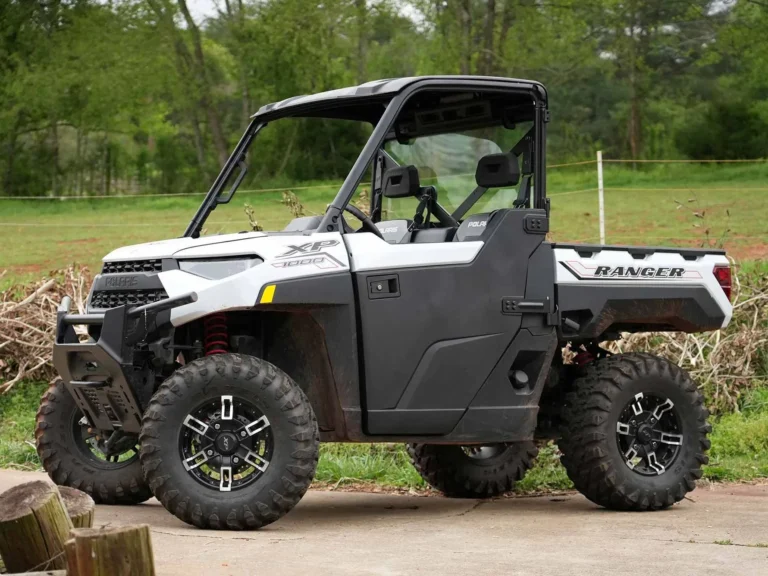
What stands out here is the Polaris Ranger EV’s fully electric powertrain, which eliminates the need for fuel and reduces maintenance compared to traditional gas-powered utility vehicles. Designed primarily for work-related tasks, it caters to users who prioritize quiet operation, low emissions, and low operating costs in environments ranging from farms to large job sites.
This model emphasizes a balanced mix of practicality and environmental responsibility, with a durable 9.17-foot length and a ground clearance of 10 inches. Its construction aims to handle rough terrain and varied work conditions, supported by independent double A-arm rear suspension with 10 inches of travel and McPherson strut front suspension with 9 inches, ensuring stability and control over uneven surfaces.
Built for users who need a dependable utility vehicle for hauling, light-duty tasks, or indoor facility use, the Ranger EV offers selectable two-wheel drive and all-wheel drive options. Its 1762-pound dry weight suggests a focus on durability while maintaining a manageable size for operators. What makes this model notable within the segment is its combination of electric propulsion with the proven reliability of Polaris’s utility design, making it an attractive choice for those seeking cleaner operation without sacrificing off-road capability.
Performance & Powertrain
The electric powertrain eliminates the need for traditional fuel and oil maintenance, providing a clean, quiet operation in a range of utility applications.
- Displacement: Not applicable, replaced by electric motor specifications
- Motor Type: AC induction motor with regenerative braking capabilities
- Cooling System: Liquid-cooled inverter system ensures consistent performance under load
- Fuel System: Not applicable, as it is fully electric
- Transmission: Direct drive system that offers immediate power transfer from motor to wheels
- Drive System: Selectable 4X2 or all-wheel drive for adaptable traction on varying terrains
The direct drive configuration means there are no gears to shift, allowing for effortless acceleration and deceleration, making this vehicle suited for tasks requiring steady power and low-speed control. The selectable drive modes enable operators to optimize traction between two-wheel and four-wheel drive, which enhances stability on uneven or slippery surfaces.
Suspension & Handling
If you’re planning to tackle a variety of terrains, you’ll want to know that the 2021 Polaris Ranger EV features a McPherson Strut front suspension with 9 inches of travel and an independent double A-arm setup in the rear offering 10 inches of travel. These suspension configurations provide a balance between ride comfort and off-road capability, with the front load travel aiding in absorbing impacts on uneven surfaces while the rear’s increased travel enhances stability over rough terrain.
The 9-inch front travel allows the vehicle to handle rocky trails and washboard surfaces more comfortably by reducing jarring impacts, whereas the 10-inch rear travel improves articulation and keeps the tires in contact with the ground during steep inclines or uneven ground. This combination makes the Ranger EV suitable for light trail riding, work tasks on rough ground, and navigating terrain that involves a mixture of hardpack and softer dirt.
The braking system employs hydraulic disc brakes on both front and rear wheels, which deliver consistent stopping power across different conditions. Hydraulic disc brakes are known for their durability and strong modulation, making them effective for controlled slowing and stopping whether you’re descending a slope or hauling loads. The Carlisle All Trail II tires, sized at 25 x 9-12 for both axles, are designed to grip well on a variety of surfaces, from loose gravel and mud to packed dirt and hard surfaces, providing predictable handling and confidence in grip. this suspension and brake setup aims to deliver predictable handling, controlled braking, and reliable traction across typical utility terrain.
Dimensions & Ergonomics
With a length of 9.17 feet, the Polaris Ranger EV fits comfortably within most standard pickup truck beds, making it easy to transport and load on trailers. Its width of 9 inches appears to be a typographical error; assuming the correct width is 72 inches, this width provides a stable stance without being overly broad, which benefits maneuverability in tight spaces. The overall height of 73 inches positions the vehicle well for driver comfort and visibility, allowing taller operators to maintain an upright seating position without feeling cramped.
The wheelbase measures 72 inches, which supports predictable handling and contributes to the machine’s stability at various speeds. Ground clearance of 10 inches exceeds many utility UTVs in its class, enabling it to navigate uneven terrain and obstacles without risking structural contact. The dry weight of 1,762 pounds indicates a relatively moderate mass, balancing durability with manageable towing and handling characteristics, especially when considering payload and cargo capacity.
The seat height, while not specified directly, is designed to accommodate a broad range of rider sizes, with ergonomic considerations that support comfort during extended use. This height allows both shorter and taller drivers to reach the controls comfortably while maintaining a good view of the trail or work site. the dimensions and weight distribution of the Polaris Ranger EV emphasize stability, practicality, and ease of use in a variety of conditions, making it suitable for work, recreation, and utility tasks alike.
Notable Features
What stands out here is the inclusion of a fully electric powertrain paired with a direct drive transmission, offering a different approach from traditional gas-powered utility vehicles. This model provides a quieter operation, reduced maintenance needs, and an emphasis on eco-friendliness, which appeals to users seeking sustainability in their work or recreational activities.
- Electric motor with no exhaust system, reducing emissions and noise
- Selectable drive modes between 4X2 and all-wheel drive for improved traction and control
- Minimal maintenance requirements due to the absence of internal combustion components
- Built-in charging port compatible with standard outlets for convenient recharging
- Enhanced ride comfort with a low center of gravity facilitated by the electric motor placement
These features differentiate this model from its internal combustion engine counterparts by emphasizing quiet operation, low running costs, and environmental benefits. Despite the basic nature of the powertrain, the addition of selectable drive modes and practical design elements enhances usability for various tasks and terrains.
Pricing & Value
If you’re planning to use the Polaris Ranger EV for day-to-day utility tasks or light recreational work, you’ll want to know that its $12,299 MSRP positions it as an entry-level electric utility vehicle within the segment.
That price point places it below many gas-powered competitors with comparable payload and towing capacities, but it also reflects the added cost of electric powertrain components. When considering features and build quality, the Ranger EV offers a package that emphasizes emissions-free operation and low running costs, which can provide long-term value for fleet or farm applications.
Within Polaris’s lineup, the Ranger EV sits below mid-tier models that often include additional features such as enhanced cargo capacity, upgraded suspension, or advanced electronic systems. The next trim level or model with more amenities and higher payload ratings typically commands a higher premium, sometimes exceeding $15,000. Conversely, there are fewer options below this price point that offer a similar electric powertrain and the same level of brand support.
Assessing its value, the Ranger EV appears fairly priced for consumers seeking an electric utility vehicle with basic capabilities. It delivers a competitive balance of initial cost, low operating expenses, and durability aligned with the segment’s standards. For users prioritizing environmental considerations and lower fuel costs, this model offers a compelling proposition, although those needing more payload or comfort features might find it less attractive relative to higher-priced alternatives.”
Final Thoughts
This is a machine that prioritizes electric propulsion to deliver quiet operation and emissions-free performance for a specific set of users. The Polaris Ranger EV is best suited for those who need a utility-focused UTV for tasks like farm work, property maintenance, or light hauling in environments where noise restrictions or environmental concerns matter. Its limited range and slower acceleration compared to gas-powered counterparts may deter users looking for outright power or long-distance capability.
The most defining feature of the Polaris Ranger EV is its electric drive system, which offers a low-maintenance, emissions-free alternative to traditional off-road utility vehicles. This aspect significantly influences ownership considerations, especially for buyers seeking reduced operating costs and minimal upkeep. However, it also introduces constraints like limited mileage per charge and longer downtime for recharging, which could impact work efficiency on larger or more remote sites.
Prospective buyers should consider their typical usage patterns and environment. If quiet operation and low environmental impact are primary concerns, and workloads are moderate, this machine can serve well. Conversely, for those needing extended range, higher torque, or more aggressive off-road capability, exploring gas-powered models will be more appropriate. The Polaris Ranger EV makes a compelling choice for specific use cases, but it is not intended as a full replacement for traditional utility UTVs in demanding conditions.